Customization of a Caftan
The caftan is one of the most elegant and adaptable garments in fashion. Its flowing shape, rich cultural history, and graceful silhouette make it suitable for both everyday refinement and grand occasions. Because of its versatility, the caftan can be transformed in many ways. Two common approaches are customization and personalization with luxury items.
Although these terms are sometimes used together, they are not the same. Customization focuses on changing the garment itself to suit the wearer’s body, taste, occasion, or design vision. Personalization with luxury items, on the other hand, focuses more on adding exclusive, high-end details or accessories that reflect the wearer’s status, identity, and refined style.
Understanding the difference between the two helps create a caftan that is not only beautiful, but also meaningful and well-designed.
What Is Customization of a Caftan?
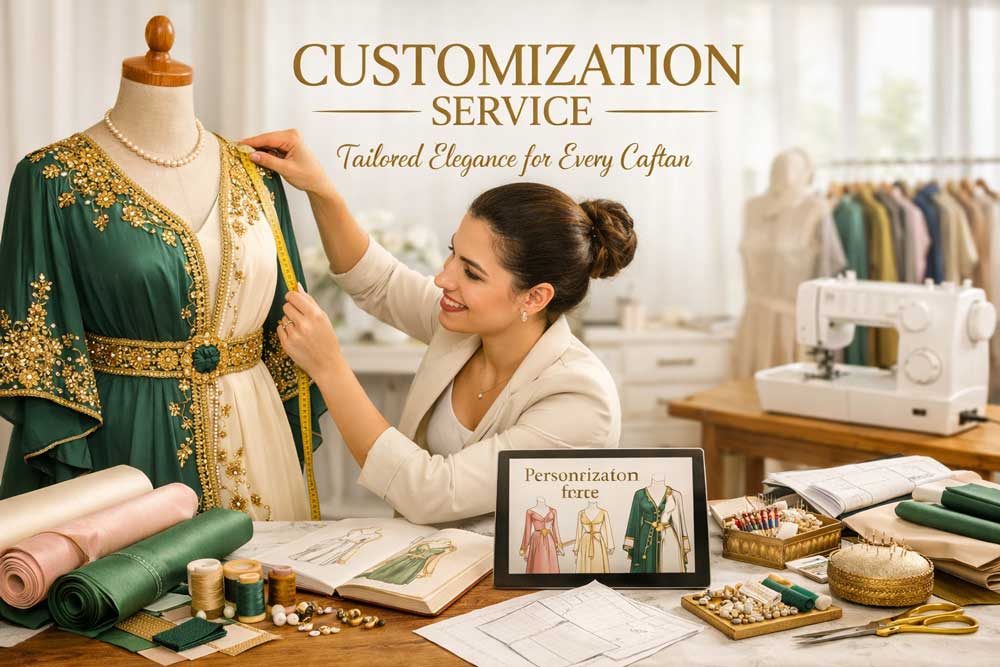
Customization is the process of modifying the caftan’s design, structure, fabric, color, size, or decorative elements according to the wearer’s preferences. It begins with the garment itself. A customized caftan may be designed from the beginning for a specific person, or an existing caftan may be altered to better fit the wearer’s needs.
For example, a customer may choose the fabric, neckline, sleeve shape, length, embroidery placement, color combination, or overall silhouette. The aim is to create a caftan that feels made for the individual.
Customization is especially important because the caftan is traditionally loose and flowing. Even though it does not usually fit tightly like a tailored suit or dress, small design decisions can greatly affect how it looks on the body. The shoulder width, sleeve volume, waistline, neckline, and length can all be adjusted to create a more flattering and elegant result.
Key Elements of Caftan Customization
A caftan can be customized in many ways. The first and most important element is fit. The garment can be adjusted according to the wearer’s height, body shape, and comfort level. A shorter caftan may suit casual events, while a floor-length version may be ideal for weddings or formal celebrations.
The second element is fabric selection. Cotton, linen, silk, satin, velvet, chiffon, brocade, and crepe each create a different effect. A customized summer caftan may use light cotton or linen, while an evening caftan may use silk, satin, or velvet.
The third element is design structure. The wearer may choose wide sleeves, narrow sleeves, bell sleeves, a V-neckline, a high neckline, a front opening, a hood, a cape-style overlay, or a more modern fitted waist. These choices change the personality of the garment.
The fourth element is decorative work. Embroidery, beading, lace, piping, borders, buttons, and trims can be selected according to the desired style. In customization, these details do not have to be luxurious or expensive. They simply need to support the chosen design.
What Is Personalization with Luxury Items?
Personalization with luxury items is different because it usually focuses on adding exclusive, high-value, or symbolic elements to the caftan. These elements may include designer belts, fine jewelry, gemstone buttons, crystal embroidery, pearl details, luxury handbags, high-end shoes, or a signature fragrance.
Personalization is more emotional and expressive. It answers the question: How can this caftan reflect the wearer’s personality, lifestyle, or status?
A caftan may be customized to fit perfectly, but personalized with luxury items to make it feel unique, glamorous, and memorable. For example, a simple black silk caftan may be customized with a specific sleeve length and neckline. It may then be personalized with a gold designer belt, diamond earrings, a luxury clutch, and a monogram embroidered in metallic thread.
The Main Difference Between Customization and Personalization
The main difference lies in purpose.
Customization changes the caftan itself.
It focuses on design, fit, structure, fabric, and construction.
Personalization with luxury items enhances the caftan through exclusive details.
It focuses on identity, elegance, emotional value, and luxury expression.
Customization is often practical and design-based. Personalization is often symbolic and style-based. Customization asks, “How should this caftan be made?” Personalization asks, “How should this caftan represent me?”
For example, changing a caftan from long sleeves to bell sleeves is customization. Adding a diamond brooch to the neckline is personalization with a luxury item. Choosing emerald green silk is customization. Pairing the caftan with an emerald necklace is personalization. Adjusting the hemline for the wearer’s height is customization. Adding a designer belt to define the waist is personalization.
Customization Creates the Foundation
A well-customized caftan is the foundation of a successful look. Without proper customization, even the most expensive accessories may not create elegance. A caftan that is too long, too wide at the shoulders, poorly lined, or made from unsuitable fabric may appear unfinished, regardless of the luxury items added to it.
Customization ensures that the caftan suits the wearer’s body and the occasion. It gives the garment harmony. It also allows the wearer to choose whether the caftan should look traditional, modern, modest, dramatic, simple, or festive.
For brides, customization may involve selecting a white or ivory fabric, creating a long train, designing special embroidery, or adding structured sleeves. For evening wear, customization may involve a rich color, flowing fabric, and elegant neckline. For resort wear, it may involve lightweight fabric, relaxed sleeves, and minimal decoration.
Personalization Adds Identity and Prestige
Once the caftan has been customized, personalization with luxury items can elevate it further. Luxury items add distinction and emotional value. They can also make the outfit suitable for high-profile events.
A personalized luxury caftan may include a handcrafted belt, crystal embellishments, pearl embroidery, gold-thread borders, designer heels, fine jewelry, or a custom clutch. These items create a complete image. They show the wearer’s taste and attention to detail.
Personalization can also include subtle elements such as initials, family symbols, birthstones, or a signature color. These details make the caftan feel intimate and exclusive.
Why the Distinction Matters
Knowing the difference between customization and personalization helps avoid confusion during the design process. A client asking for customization may want changes in the garment’s cut, size, or fabric. A client asking for personalization may want details that make the caftan feel more unique, luxurious, or emotionally meaningful.
For designers, this distinction is important because it helps guide the conversation with the client. For customers, it helps them communicate clearly what they want. They may need customization, personalization, or both.
A woman preparing for a wedding, for example, may first customize her caftan by choosing the fabric, shape, embroidery style, and length. After that, she may personalize it with luxury items such as a jeweled belt, pearl earrings, and a custom-made clutch. The result is a caftan that fits her body, suits the occasion, and expresses her personality.
When to Choose Customization
Customization is the best choice when the wearer wants control over the caftan’s design. It is ideal for someone who needs a specific size, color, sleeve style, fabric, or level of modesty. It is also useful when the caftan must match a wedding theme, cultural ceremony, family celebration, or professional event.
Customization is also practical for comfort. A customized caftan can be made lighter, more breathable, more structured, or easier to move in. This makes it suitable not only for beauty, but also for wearability.
When to Choose Personalization with Luxury Items
Personalization with luxury items is ideal when the wearer wants the caftan to feel exclusive, glamorous, or symbolic. It is especially suitable for formal events, luxury gatherings, weddings, engagement ceremonies, gala dinners, and important celebrations.
This approach works well when the caftan itself is already beautifully made, but the wearer wants to add a distinctive personal signature. Luxury personalization can transform a simple caftan into a memorable statement piece.
Combining Both Approaches
The most refined caftans often combine customization and personalization. Customization gives the garment its perfect form, while personalization gives it character and prestige.
A caftan may be customized in silk satin with a high neckline, long flowing sleeves, and hand embroidery along the front. It may then be personalized with a gold belt, pearl earrings, jeweled sandals, and a monogrammed clutch. Together, these elements create a complete luxury look.
The secret is balance. A heavily embroidered caftan may need minimal luxury accessories. A simple caftan may allow for bolder jewelry or a dramatic belt. The best result is achieved when customization and personalization support each other rather than compete.
Conclusion
Customization and personalization with luxury items both enhance the beauty of a caftan, but they do so in different ways. Customization focuses on the garment itself: its fit, fabric, cut, color, and design. Personalization with luxury items focuses on the wearer’s identity, elegance, and exclusive finishing touches.
Customization makes the caftan suitable. Personalization makes it special. Customization creates the foundation. Personalization adds emotion, prestige, and individuality.
When both are used thoughtfully, the caftan becomes more than clothing. It becomes a refined expression of culture, craftsmanship, personal taste, and timeless elegance.