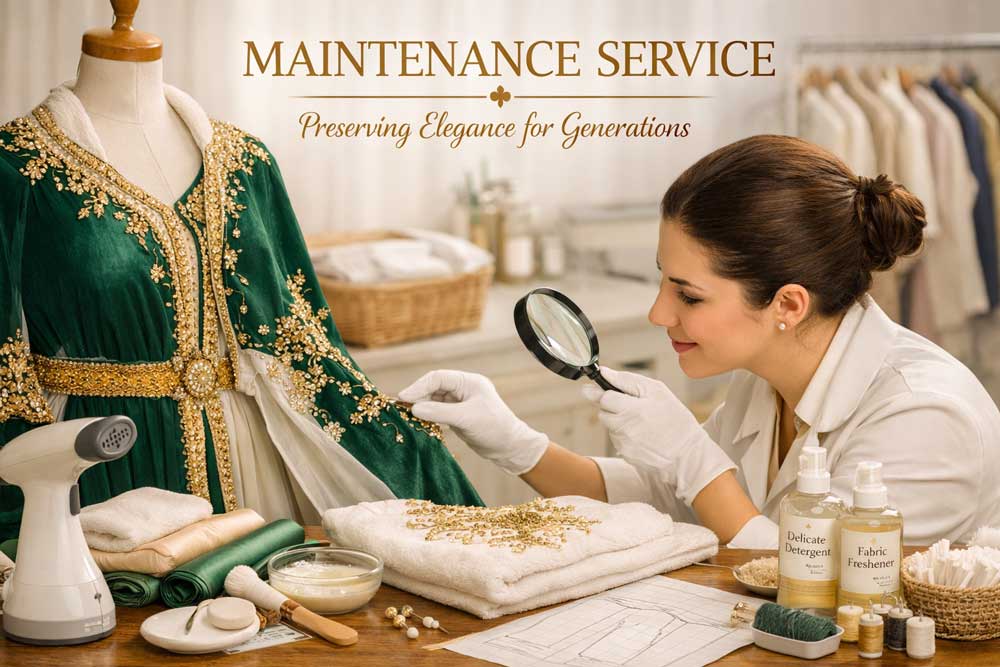
Maintenance of a Caftan
A caftan is more than a beautiful garment. It is often a piece of cultural heritage, craftsmanship, and personal style. Whether simple or luxurious, casual or ceremonial, a caftan requires proper care to preserve its shape, fabric, color, embroidery, and elegance. Good maintenance allows a caftan to remain beautiful for many years and even become a treasured piece passed from one generation to another.
Understanding the Nature of the Caftan
The caftan is usually designed with a loose, flowing silhouette. This gives it comfort and grace, but it also means that the garment often contains delicate seams, wide sleeves, long hems, decorative trims, and sometimes heavy embroidery or embellishment. Because of these features, a caftan should be handled with more care than ordinary clothing.
The maintenance method depends mainly on the fabric and decoration. A cotton or linen caftan may be easier to wash and iron, while a silk, velvet, brocade, satin, or heavily embroidered caftan requires more delicate treatment. Before cleaning or storing a caftan, it is important to understand what it is made of.
Reading the Care Label
The first step in maintaining a caftan is to check the care label. The label usually gives instructions about washing, drying, ironing, and dry cleaning. Some caftans can be hand washed, while others should only be professionally dry cleaned.
Ignoring the care label can damage the garment. Hot water may shrink fabric, strong detergent may fade the color, and high heat may ruin delicate fibers. If the caftan has embroidery, beads, sequins, pearls, crystals, or metallic thread, professional cleaning is often the safest choice.
Washing a Caftan Properly
For washable caftans, gentle hand washing is usually better than machine washing. Use cold or lukewarm water and a mild detergent. The caftan should be soaked briefly and moved gently in the water. Avoid rubbing, twisting, or scrubbing, especially around embroidery or decorated areas.
If machine washing is allowed, place the caftan in a protective laundry bag and use a delicate cycle. Wash it separately or with similar colors to prevent color transfer. Strong detergents, bleach, and fabric softeners should be avoided because they can weaken fibers and affect the finish of the fabric.
After washing, rinse the caftan carefully to remove all detergent. Soap residue can make the fabric stiff or dull over time.
Drying the Caftan
Drying is an important part of caftan maintenance. A caftan should not be wrung out, because twisting can distort the fabric and damage embellishments. Instead, gently press out excess water using a clean towel.
The best method is to lay the caftan flat on a dry towel or hang it on a padded hanger in a shaded, well-ventilated area. Direct sunlight should be avoided because it can fade colors, especially on silk, cotton, and richly dyed fabrics.
Tumble drying is usually not recommended, particularly for delicate or decorated caftans. High heat can shrink fabric, loosen threads, melt synthetic details, or damage embroidery.
Ironing and Steaming
A well-maintained caftan should look fresh and smooth, but ironing must be done carefully. Always check the fabric type before applying heat. Cotton and linen can usually tolerate higher temperatures, while silk, satin, chiffon, and synthetic fabrics require low heat.
It is best to iron the caftan inside out or use a pressing cloth between the iron and the fabric. This prevents shine marks, burns, and damage to delicate surfaces. Embroidered or beaded areas should not be pressed directly. Instead, steam can be used gently from a distance.
A garment steamer is often safer than an iron for delicate caftans. It relaxes wrinkles without flattening embroidery or harming the fabric. However, too much steam should be avoided on fabrics that are sensitive to moisture, such as some silks and velvets.
Caring for Embroidery and Embellishments
Many caftans feature embroidery, beads, sequins, crystals, pearls, metallic threads, or decorative buttons. These details add beauty, but they also require special care.
When wearing a decorated caftan, avoid pulling on the embroidery or rubbing it against rough surfaces. Jewelry, handbags, and belts should be chosen carefully so they do not catch on threads or beads. If a thread becomes loose, it should not be pulled. It is better to secure it gently or take the caftan to a skilled tailor.
Decorated caftans should be cleaned less frequently and aired after wearing when possible. Excessive washing can loosen embellishments and reduce the richness of the garment.
Removing Stains
Stains should be treated quickly, but gently. Do not rub the stain, because rubbing can push it deeper into the fabric or damage the surface. Instead, blot the stain with a clean, soft cloth.
For water-based stains, a small amount of cold water may help, but delicate fabrics should be treated with caution. Oil, perfume, makeup, henna, and food stains may require professional cleaning. Trying to remove difficult stains at home can sometimes make them worse.
For valuable or heavily embellished caftans, professional stain removal is the safest option.
Storing a Caftan Correctly
Proper storage protects the caftan from dust, moisture, insects, wrinkles, and fabric stress. A caftan should be clean and completely dry before being stored. Storing a garment with perfume, sweat, or food residue can attract insects and cause discoloration.
For everyday caftans, hanging may be suitable. Use a wide, padded hanger to support the shoulders and prevent stretching. Avoid thin wire hangers because they can leave marks or distort the shape.
Heavy caftans, especially those made of velvet, brocade, or heavily embroidered fabric, should often be folded instead of hung. Hanging a heavy caftan for a long time can stretch the shoulders and seams. When folding, place acid-free tissue paper between the folds to reduce creasing and protect embellishments.
A breathable garment bag is better than a plastic cover. Plastic can trap moisture and cause mildew or yellowing over time.
Protecting the Caftan from Perfume and Cosmetics
Perfume, deodorant, makeup, body oils, and lotions can stain or weaken fabric. It is best to apply perfume and cosmetics before wearing the caftan and allow them to dry completely. Spraying perfume directly onto the garment should be avoided, especially if the caftan is made of silk, satin, or light-colored fabric.
Makeup transfer around the neckline is common, so extra care should be taken when dressing. Wearing a scarf over the head while putting on the caftan can help protect the neckline from foundation or lipstick stains.
Repair and Alteration
Regular inspection helps keep a caftan in excellent condition. Check the seams, hems, buttons, zippers, embroidery, and lining from time to time. Small repairs should be done early before they become larger problems.
A loose button, small tear, or open seam can usually be repaired easily. However, delicate fabrics and embroidered sections should be handled by an experienced tailor. If the caftan is valuable or traditional, repairs should respect the original design and craftsmanship.
Alterations may also be needed if the wearer’s body shape changes or if the caftan is passed to another person. Adjusting the length, sleeves, or waist can give the garment new life while preserving its beauty.
Seasonal Maintenance
Caftans worn only for special occasions should be maintained even when they are not used often. Before storing them for a long period, they should be cleaned, aired, and checked for stains or damage.
During long storage, it is helpful to take the caftan out occasionally and allow it to breathe in a clean, shaded area. Refolding it in a different way can prevent permanent crease lines. This is especially useful for silk, velvet, and heavily decorated caftans.
Maintaining Everyday Caftans
Not all caftans are ceremonial or luxurious. Many are worn at home, on vacation, or for casual gatherings. These caftans also benefit from good care. Lightweight cotton, linen, or rayon caftans should be washed gently, dried away from harsh sunlight, and ironed or steamed according to the fabric.
Everyday caftans may be washed more often, so choosing mild detergent and avoiding high heat will help preserve their color and softness.
Maintaining Luxury Caftans
Luxury caftans require a higher level of care. Silk, velvet, brocade, lace, hand embroidery, pearls, crystals, and metallic threads are sensitive to moisture, heat, friction, and chemicals. These garments should be worn with care, cleaned professionally when necessary, and stored in breathable covers.
A luxury caftan should not be crowded in a wardrobe. It needs space so that embroidery and embellishments do not press against other garments. Proper storage protects both the structure and the decoration.
Conclusion
Maintaining a caftan is essential for preserving its elegance, comfort, and cultural value. Good care begins with understanding the fabric, following the care label, washing gently, drying properly, storing correctly, and repairing small damages early.
A caftan that is well maintained keeps its beauty for years. Its colors remain rich, its embroidery stays refined, and its shape continues to flow gracefully. Whether simple or luxurious, modern or traditional, a caftan deserves careful attention because it is not only a garment, but a timeless expression of style, heritage, and craftsmanship.